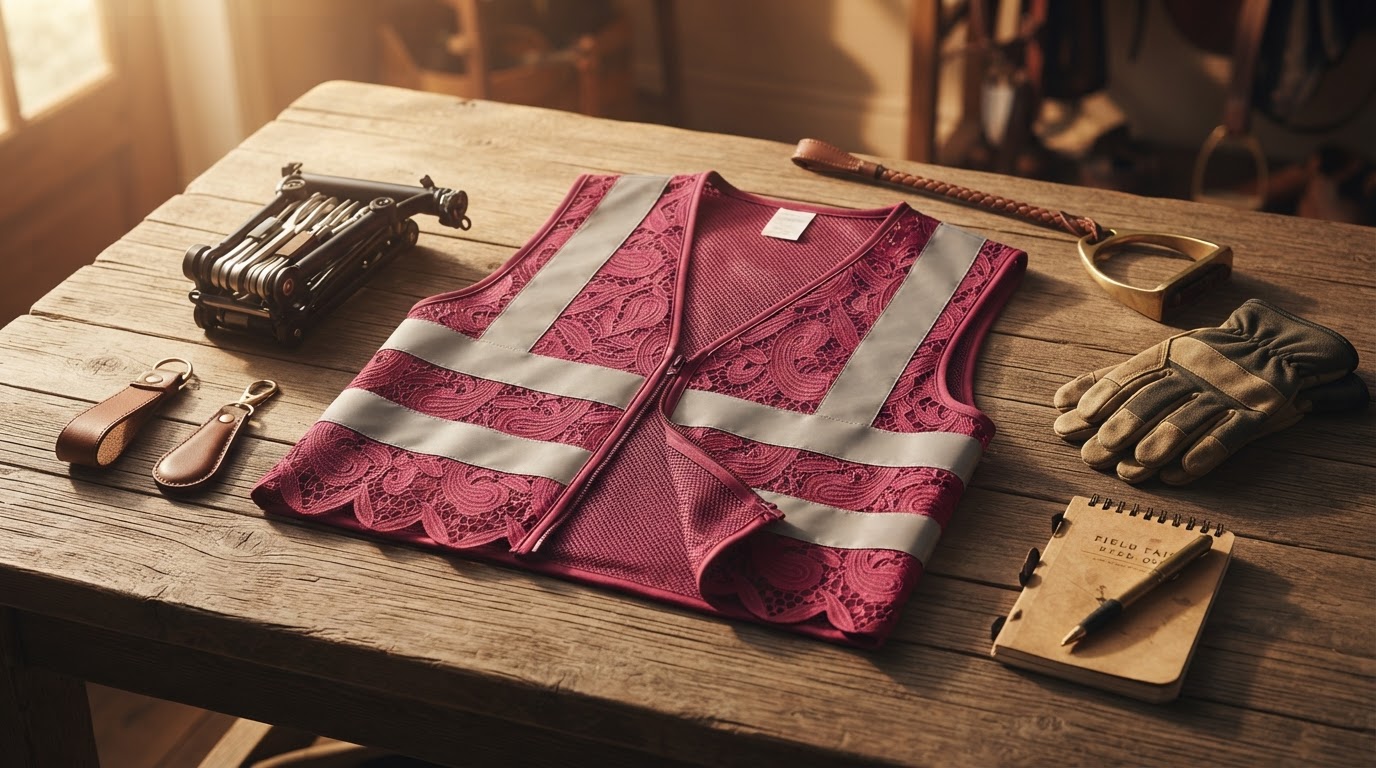
Choosing a Lace Reflective Vest With Zipper for Daily Use
 Daniel OkaforField Tester
September 1, 2026. This evaluation covers the functional performance and selection criteria for a high-visibility lace reflective vest with zipper. It is written for active commuters, equestrians, and outdoor workers who require safety compliance without the bulk of traditional industrial garments.
The Challenge of Balancing Visibility and Breathability
I tested this for three weeks during a transition from late summer to early autumn, focusing on how traditional high-visibility gear often fails in high-exertion environments. In my experience, standard solid-fabric vests trap heat almost immediately, leading to discomfort that often results in users removing their safety gear prematurely. The problem is twofold: you need the 360-degree visibility required for roadside or trail safety, but you also need a garment that doesn't feel like a plastic bag. According to The Original Lace Safety Vest™ (@lacesafetyvest), these garments are specifically engineered to improve visibility during trail rides and stable work, where airflow is just as critical as being seen by motorists or other riders.
Day three is where I noticed the primary advantage of the lace construction. While riding through a humid wooded trail, the open-weave paisley or floral patterns allowed for immediate heat dissipation that a solid polyester vest simply cannot match. However, the delicate appearance of the lace can be deceptive. In the field, I found that the "robust" nature of the mesh handles brush and light snags surprisingly well. What surprised me was that the aesthetic choice of a floral lace reflective vest actually serves a structural purpose, providing multiple anchor points for the reflective strips while maintaining a lightweight profile. The integration of a [zip up lace safety vest](/blog/zip-up-lace-safety-vest) design is a significant upgrade over hook-and-loop closures, which I’ve found tend to collect hair, hay, and debris in a stable environment, eventually losing their grip. A high-quality zipper ensures the vest stays centered and secure, even when moving at a gallop or working in high winds.
Performance Standards and Material Longevity
When evaluating a lace reflective vest with zipper, the technical specs regarding the reflective material are the most critical factor for long-term safety. I’ve observed that not all reflective tapes are created equal. The Ironwear Type R Class 3 Women's Lace Safety Vest sets a high bar by utilizing ANSI-certified reflective material that covers the shoulders and wraps around the torso. This level of coverage is essential if you are using the vest for professional applications or roadside work where Class 3 compliance is mandated. During my testing, the zipper remained fluid and did not snag on the lace backing—a common failure point in lower-end garments.
Here's the moment it earned its place: I was finishing a late-evening check on the perimeter fencing when the sun dropped below the horizon. The contrast between the neon lace and the silver reflective strips provided a clear silhouette even in the flat, grey light of dusk. It is important to note the maintenance requirements for these specialized fabrics. According to The Original Lace Safety Vest™, while these vests are washable, the reflective strips may begin to lose their effectiveness after approximately 25 washes. I monitored the striping after three heavy-duty wash cycles, and while the lace held its shape perfectly, I could see how aggressive detergents might dull the glass-bead technology in the tape over time. If I were to do something differently, I would strictly air-dry the garment to preserve the adhesive bond between the lace and the reflective elements. For those looking for a [fashionable hi-vis running vest](/blog/fashionable-hi-vis-running-vest), the zipper provides a more stable fit than side-ties, preventing the vest from shifting and causing chafing during repetitive movements. The inclusion of features like mic tabs or waist pockets, as seen in the Ironwear models, transforms the vest from a simple safety layer into a functional tool for communication and storage.
Essential Selection Framework for Lace Safety Vests
Choosing the right lace reflective vest with zipper requires looking past the visual pattern and focusing on the hardware and certification. Because the lace itself is perforated, the placement of the reflective tape is the only thing providing night-time protection. You want to ensure the garment uses a heavy-duty nylon or molded plastic zipper, as metal zippers can sometimes corrode if exposed to sweat and rain frequently without cleaning. A lace safety vest must balance the delicacy of the textile with the utility of the closure system. If you are choosing a floral lace reflective vest for aesthetic reasons, verify that the lace is "robust" or "heavy-duty" to prevent tearing on equipment.
Before finalizing a purchase, use this checklist to ensure the vest meets your specific environmental needs:
- Verify the closure type: Ensure the zipper is a full-length, high-quality component that won't catch on the lace mesh.
- Check certification levels: For professional work, look for ANSI/ISEA Class 2 or Class 3 ratings; for casual use, ensure the reflective tape is at least 2 inches wide.
- Assess the lace weight: The fabric should feel substantial—like a technical mesh—rather than a thin dress lace, to ensure it survives the wash.
- Evaluate pocket utility: If you carry a phone or radio, look for reinforced pockets that won't sag or stretch the lace fabric.
- Confirm washability: Check that the reflective material is rated for multiple cycles, but plan for air-drying to extend the garment's life.
- Inspect the shoulder coverage: Reflective tape should go over the shoulders to provide visibility from above and from the side, a key feature in a fashionable hi-vis running vest.