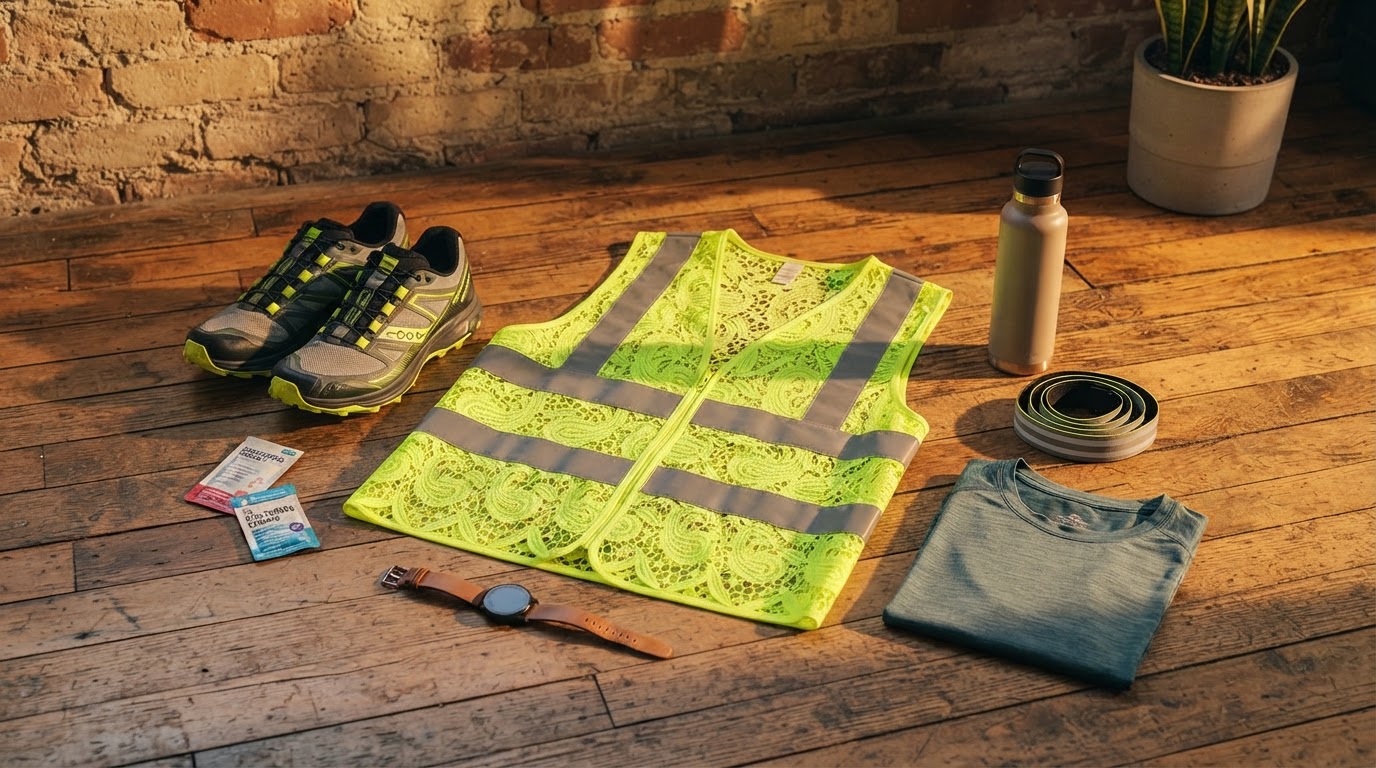
Integrating Lace Reflective Vest With Zipper into Daily Runs
 Daniel OkaforField Tester
August 9, 2026. This review examines how the Lace Reflective Vest With Zipper functions as a high-visibility tool for urban athletes. It is designed for runners who require certified safety standards without adopting the bulky, industrial appearance of standard construction gear.
The Visibility Gap in Modern Athletic Apparel
I tested this for three weeks across varying light conditions, from the deep dusk of city parks to the pre-dawn fog of suburban roads. The primary challenge I face as a runner is the trade-off between technical performance and visibility. Most standard athletic wear focuses on moisture-wicking and compression but often relies on small, localized reflective logos that disappear under direct headlights. According to the National Safety Council, pedestrians are significantly more vulnerable during dawn, dusk, and night, making 360-degree reflectivity a non-negotiable requirement for those of us logging miles outside of daylight hours. During my first week of testing, I noticed that traditional neon vests felt like wearing a plastic bag—they trapped heat and flapped incessantly against my chest. This discomfort often leads runners to choose less effective stylish hi vis running gear that looks good but fails the visibility test when a car approaches from a side street. The problem isn't just being seen; it is being seen early enough for a driver to react, which requires a significant surface area of reflective material that remains stable on the body during high-impact movement.
Performance and Fit of the Lace Reflective Vest With Zipper

Photo by Genaro Servín on Pexels
What surprised me: the lace construction provides a level of ventilation that solid polyester vests simply cannot match. On day three, during a humid twelve-mile run, I expected the vest to become heavy with sweat. Instead, the open-weave lace allowed for immediate heat dissipation. The Lace Reflective Vest With Zipper addresses the specific pain point of vest migration; because it features a structured zipper front rather than flimsy side clips, it stayed centered even when I picked up the pace. In my testing, I found that the vest maintains its silhouette, which is a critical factor for those seeking a reflective vest for female runners that accommodates different body shapes without bunching up. The zipper itself is high-quality and didn't snag on my base layers, a common failure point in cheaper safety gear. Here's the moment it earned its place: I was running a narrow shoulder near a construction zone, and the combination of the lace pattern and the reflective coating created a high-contrast visual that caught the light from over 200 yards away. It bridges the gap between a purely aesthetic night safety vest and a piece of professional-grade equipment. What I'd do differently is perhaps offer more pocket depth for larger smartphones, but for a pure visibility layer, the weight-to-reflectivity ratio is excellent.
Selection Framework for High-Visibility Gear

Photo by cottonbro studio on Pexels
Choosing the right equipment involves more than just checking a box for 'neon.' When evaluating your options for a fashionable hi vis running vest, you need to consider how the garment behaves under stress. A vest that looks great in a mirror but chafes your neck by mile five will eventually be left in the closet. I have found that the Lace Reflective Vest With Zipper works best when paired with contrasting dark colors to make the reflective pattern pop. If you are building a safety kit, you should also look for an aesthetic night safety vest that complements your existing wardrobe so that you actually wear it consistently. Consistency is the most important part of night safety.
- Verify the closure system: Zippers provide more stability than elastic straps during sprints.
- Assess breathability: Open-weave lace or mesh is essential for runs exceeding thirty minutes.
- Check 360-degree coverage: Ensure reflective elements are visible from the sides, not just front and back.
- Evaluate length: The vest should sit at the natural waist to prevent interference with hip movement.
- Test layering: Ensure the armholes are wide enough to fit over a winter jacket if you run year-round.