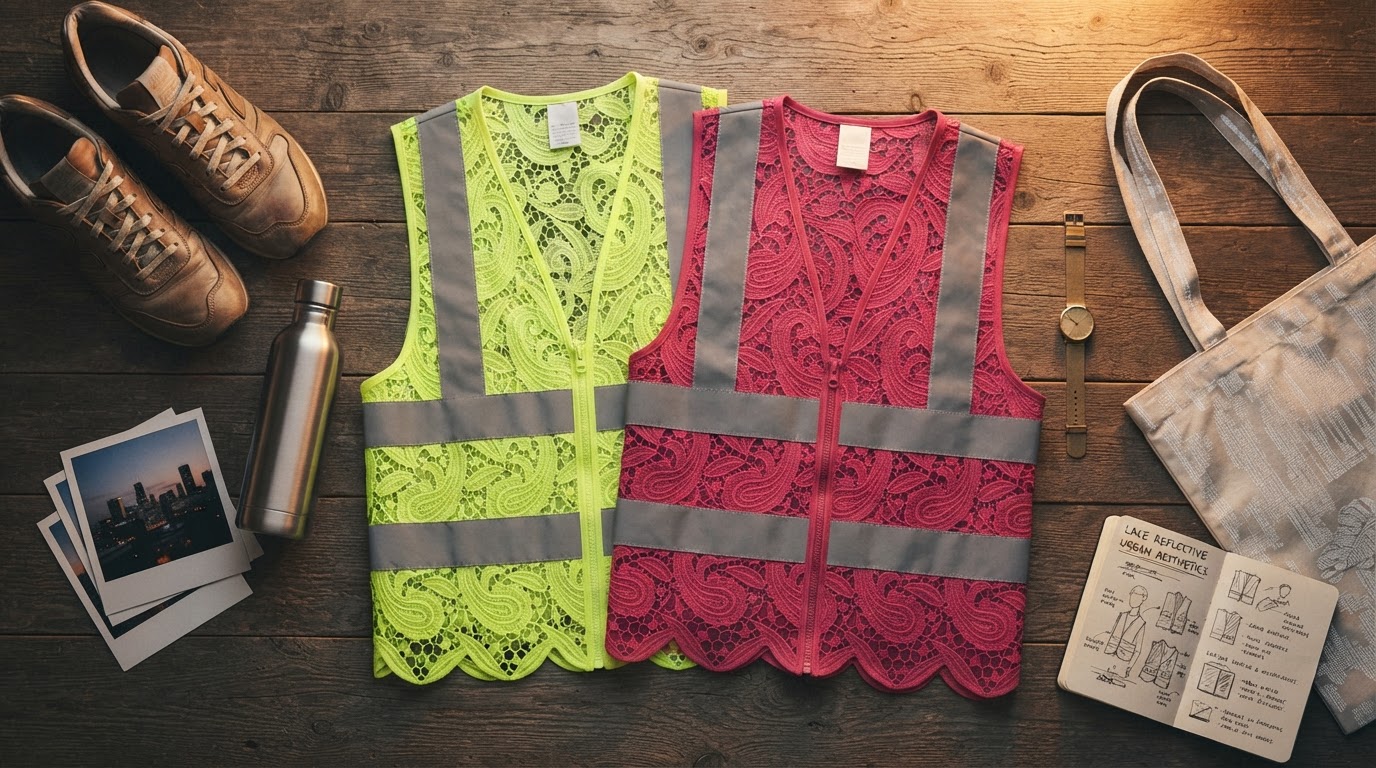
Lace Reflective Vest With Zipper Design Principles
 Priya RamanSenior Analyst
August 1, 2026. High-visibility apparel is undergoing a structural shift as technical requirements merge with aesthetic preferences for active consumers. This analysis examines how the Lace Reflective Vest With Zipper integrates retroreflective technology into a lightweight lace substrate for urban safety.
Evaluating safety gear requires a specific framework. Think of it as a matrix of visibility surface area, structural durability, and thermal regulation. When these factors align, the garment moves from being a compliance item to a functional piece of equipment. Two axes matter here: the physical integrity of the closure system and the omnidirectional placement of reflective elements. By placing the Lace Reflective Vest With Zipper at the center of this matrix, we can observe how it addresses the specific needs of pedestrians and cyclists who require low-light protection without the bulk of industrial-grade polyester.
The Evolution of Visibility in Urban Environments
The necessity for enhanced visibility is driven by the increasing complexity of multi-modal transportation systems. As urban density rises, the visual noise of city lights makes it harder for drivers to distinguish human silhouettes. Standard safety equipment often prioritizes maximum luminosity over wearable ergonomics, leading to low adoption rates among casual users. The Lace High Visibility Vest addresses this by utilizing a patterned lace that allows for high airflow, reducing the heat trap effect common in traditional neon mesh. In many environments, the primary failure point of safety gear is the user's reluctance to wear it due to discomfort or restricted movement. A fashionable safety vest for women bridges the gap between utility and personal style, ensuring that safety protocols are followed because the garment fits into a daily wardrobe rather than clashing with it. The integration of a zip up lace safety vest mechanism ensures that the garment remains secured during high-velocity activities like cycling or running, where wind resistance can cause loosely fastened gear to shift or obscure reflective strips. According to the National Safety Council, visibility is the primary factor in preventing pedestrian-vehicle collisions during dawn and dusk hours. The decision rule for selecting such gear is whether the reflective coverage remains consistent regardless of the wearer's posture.
Technical Integration of Lace and Reflective Materials

Photo by Eduardo HernandezSoto on Pexels
The construction of a Lace Reflective Vest With Zipper involves a sophisticated bonding process where retroreflective glass beads or micro-prismatic films are applied to a delicate lace base. This combination is counter-intuitive; lace is inherently porous and fragile, while reflective materials are typically rigid. However, the Lace Reflective Vest With Zipper solves this by using a reinforced lace weave that supports the weight of the zipper hardware without sagging. The zipper itself serves as a structural spine, preventing the vest from bunching and ensuring the reflective patterns remain taut and visible to oncoming headlights. When comparing this to a standard lace high visibility vest, the presence of the zipper allows for a more tailored fit, which is crucial for maintaining the orientation of the reflective elements. A zip up lace safety vest also offers a higher degree of reliability compared to hook-and-loop fasteners, which can degrade over time or snag on the lace material. Once you see it this way, the zipper is not just a closure—it is a stabilizer for the entire safety system. The fashionable safety vest for women category relies heavily on this stability to maintain a silhouette that is both protective and visually appealing. The reflective lace vest provides 360-degree coverage, utilizing the intricate patterns of the lace to scatter light in multiple directions, which increases the likelihood of detection by vehicle sensors and human drivers alike.
Selection Framework for Reflective Lace Apparel

Photo by Connor Scott McManus on Pexels
Choosing the correct Lace Reflective Vest With Zipper requires an assessment of the environment and the intensity of the activity. A casual walker has different requirements than a long-distance runner, particularly regarding the tension placed on the zipper and the breathability of the lace. The decision rule: prioritize the zipper quality and lace density relative to your highest-impact activity to ensure the vest does not shift during use. Once the structural integrity is confirmed, the focus shifts to the placement of the reflective strips across the lace pattern. A well-designed Lace Reflective Vest With Zipper will have consistent reflectivity across the shoulders and waist, ensuring that the human form is recognizable from a distance. The following checklist serves as a final evaluation tool for consumers:
- Verify the zipper is a non-corrosive material to withstand sweat and humidity.
- Ensure the lace pattern does not have large gaps that reduce the total reflective surface area.
- Check for reinforced stitching at the zipper tape and shoulder seams.
- Confirm the vest provides at least 200 meters of visibility in low-light conditions.
- Assess the fit to ensure the zip up lace safety vest does not restrict chest expansion during exercise.
Shop Lace Reflective Vest With Zipper here.